City View Dental · El Paso, TX
Dental bone grafts
Dental bone grafts starts with understanding your needs. Explore the information below, then talk with our team about your questions, your options, and what to expect.
Request a consultationPlanning for adequate bone support
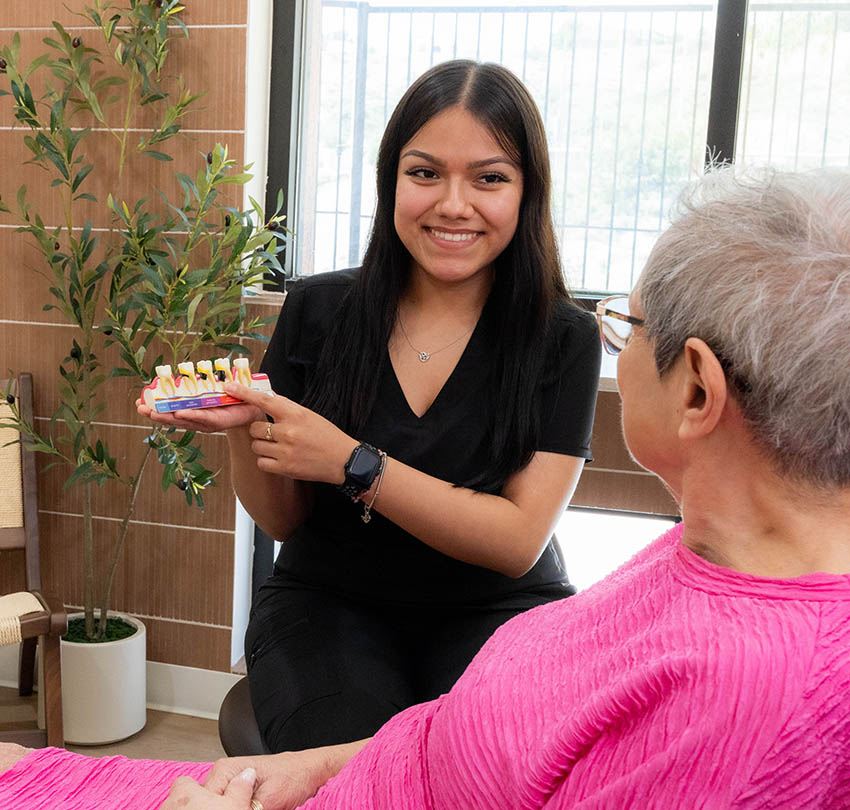
Tooth loss and other dental conditions can affect jawbone volume. A bone graft places material in an area that needs additional support and provides a foundation for healing and new bone formation.
Your dentist will evaluate the location, existing bone, and overall treatment plan. Not everyone needs a graft before receiving implants.
Material and timing
Graft materials may come from your own bone, processed donor sources, or synthetic materials. Discuss the proposed material, alternatives, risks, and healing period before deciding.
Healing is part of the plan. Your dentist will explain when the graft can be reassessed and when further restorative or implant treatment may be appropriate.
Common questions
Why might a graft be recommended?
A graft may be considered after tooth loss or when there is insufficient bone for the planned treatment. An examination and imaging help establish the need.
Does a graft guarantee an implant will succeed?
No. Grafting is one part of treatment planning; healing and outcomes depend on individual circumstances.
How long does healing take?
Timing varies with the graft, site, and your health. Follow the schedule and care instructions given by your treating clinician.
Plan your consultation
1717 Brown Street, Suite 1B, El Paso, TX 79902.
Monday-Friday: 8 AM-4 PM. Saturday: 8 AM-1 PM. Sunday: closed.
Call (915) 544-1600 or request an appointment. Our staff will contact you to confirm availability; submitting a request does not reserve a time.
Rebuilding support
Why a dental bone graft may be recommended
Jawbone can shrink after tooth loss or be damaged by gum disease, infection, or injury. A bone graft places grafting material in a deficient area to support new bone formation. It may preserve an extraction site, strengthen support around selected teeth, or create enough foundation for a future dental implant.
Where grafting material comes from
Depending on the case, graft material may come from your own body, a screened human or animal donor source, or a synthetic material. Your dentist will explain the recommended material, why it fits your treatment plan, and any alternatives.
Planning for dental implants
Digital imaging is used to evaluate bone height, width, and nearby anatomy. Some grafts can be performed when a tooth is removed or an implant is placed; others require a separate healing period before implant treatment can proceed. The timeline depends on the size and location of the graft and your healing response.
What happens after grafting?
You will receive instructions for protecting the area, cleaning, diet, medications, and activity. Follow-up visits allow us to monitor healing. A graft supports bone development, but implant candidacy and timing still require clinical and imaging evaluation.